What do you feel about the following sentence:
다음 문장에 대해 어떻게 느끼나요?
“AI agents are the future of software development. We won’t need developers anymore to slow down the progress of a business.”
“AI 에이전트는 소프트웨어 개발의 미래다. 우리는 더 이상 비즈니스의 진보를 늦추는 개발자가 필요 없을 것이다.”
If you’re a senior developer and you think this is true, I’m somewhat suspicious of your expertise (I’ll explain why; I’m not needlessly antagonistic).
당신이 시니어 개발자이고 이 말이 맞다고 생각한다면, 나는 당신의 전문성에 다소 의심을 품게 됩니다(왜 그런지 설명하겠습니다; 괜히 적대적으로 구는 건 아닙니다).
But if you’re not a senior developer and you think this is true, I think you’re probably right.
하지만 당신이 시니어 개발자가 아니고 이 말이 맞다고 생각한다면, 나는 당신이 아마도 옳다고 생각합니다.
Huh? What’s going on here?
어라? 이게 지금 무슨 상황이야?
Copywriting is, in its essence, about matching a message to an audience.
카피라이팅은 본질적으로 메시지를 대상 독자와 정확히 맞춰 주는 일이다.
And so, to me, a copywriter, what’s happening here is that the same message is meaning two different things to two different audiences.
그래서 나 같은 카피라이터의 눈에는, 지금 벌어지는 일이란 같은 메시지가 서로 다른 두 집단에게 전혀 다른 의미로 받아들여지고 있는 상황이다.
If you’re a senior developer, and if you’ve played with the agents and skills and models and all the other things that are blowing people’s minds, and if your intuition is still telling you something is off in how people are proclaiming your job obsolete, then here, in this post, I’m going to try and put words to your intuition (as a good copywriter does).
당신이 시니어 개발자이고, 사람들을 놀라게 만드는 각종 에이전트, 스킬, 모델 같은 것들을 직접 만져 봤고, 그럼에도 불구하고 사람들이 당신의 일을 곧 쓸모없어질 직업이라고 떠들어대는 방식 어딘가가 이상하다고 느끼고 있다면, 여기 이 글에서 나는 (좋은 카피라이터가 하듯) 그 직감을 말로 풀어 보려고 한다.
But wait a minute! Many seasoned and famous developers are also proclaiming the death of the developer.
그런데 잠깐만요! 많은 노련하고 유명한 개발자들도 역시 개발자의 종말을 선언하고 있습니다.
How’s that? Whose intuition is right? And what’s causing this split?
어떻게 된 일일까요? 누구의 직관이 맞는 걸까요? 그리고 이 분열은 무엇 때문에 생기는 걸까요?
When I join a team there are two kinds of senior developers I meet.
제가 어떤 팀에 합류하면, 거기서 만나는 시니어 개발자는 두 부류입니다.
The first kind says things like:
첫 번째 유형의 사람은 이렇게 말합니다:
“I found this new tool and it’s pretty cool…”
“새로운 툴을 찾아봤는데 꽤 괜찮더라 …”“This company <company totally unlike the one we’re in> does things this way, so …”
“<지금 우리가 있는 회사와는 전혀 다른 회사>에서는 이렇게 하더라, 그래서 …”“Here, look at this HackerNews post that says this is best practice, we should probably …”
“여기, 이게 베스트 프랙티스라고 하는 HackerNews 글이 있는데, 우리도 아마 …”
I don’t like this kind of senior developer. A little self-protective, lots of time spent in the industry, probably a good people person.
난 이런 타입의 시니어 개발자는 별로다. 약간 자기 방어적이고, 업계에서 보낸 시간은 많고, 아마 사람들하고도 잘 지내는 타입이다.
But not my wavelength.하지만 나랑은 결이 다르다.
Then there’s also this kind of senior developer:
그리고 이런 시니어 개발자도 있다:
“Do we really need that?”
“그게 정말 필요한가요?”“What happens if we don’t do this?”
“이걸 안 하면 어떻게 되죠?”“Can we make do for now? Maybe come back to this later when it becomes more important?”
“지금은 이 정도로 어떻게 안 될까? 나중에 이게 더 중요해지면 그때 다시 보면 안 될까?”
Ah, baby, this is my senior developer. The avoider, the reducer, the recycler. They want to avoid development as much as they can.
아, 이 친구야말로 내 시니어 개발자다. 회피자, 축소자, 재활용가. 가능한 한 개발 자체를 피하고 싶어 한다.
Why? Because they hunt a singular monster in professional software development: complexity.
왜일까? 그들은 전문 소프트웨어 개발에서 단 하나의 괴물을 사냥하기 때문이다. 바로 복잡성이다.
Special cases, if conditions, new database tables, new components. All yuck yucks. The senior developer wants as little of this as possible, spending lots of time making sure they absolutely need to add more code.
예외 케이스, if 조건, 새로운 데이터베이스 테이블, 새로운 컴포넌트. 전부 다 싫은 것들이다. 시니어 개발자는 이런 것들을 최대한 줄이고 싶어 하고, 정말로 코드를 더 추가해야만 하는지 확인하는 데 많은 시간을 쓴다.
Because adding to a system is risking more complexity.
왜냐하면 시스템에 무언가를 추가하는 일은 더 큰 복잡성을 감수하는 일이기 때문이다.
Yes, yes, of course this is simplistic. There are senior developers who excel at taking on unsolved problems and finding new creative designs.
물론, 물론, 이렇게 말하는 건 단순화된 거다. 아직 풀리지 않은 문제를 떠안고 새로운 창의적 설계를 해내는 뛰어난 시니어 개발자들도 있다.
But eventually, if you’re taking responsibility for a working system, you’re scared of complexity.
하지만 결국, 돌아가는 시스템에 대한 책임을 지는 입장에 서게 되면, 복잡성이 두려워진다.
Now, why is that? What’s the downside of complexity? And why doesn’t anybody else get it?
그렇다면, 왜 그런 걸까? 복잡성이 가져오는 단점은 무엇일까? 그리고 왜 다른 사람들은 아무도 그것을 이해하지 못하는 걸까?
We’re going to be simplifying what a business is using two loops.
우리는 두 개의 루프를 사용해 비즈니스가 무엇인지 단순화해 볼 것이다.
This is the first loop; marketers, salespeople, product managers, the CEO, they all live here:
이곳이 첫 번째 루프입니다. 마케터, 영업 담당자, 제품 관리자, CEO, 그들 모두가 이곳에서 살아갑니다
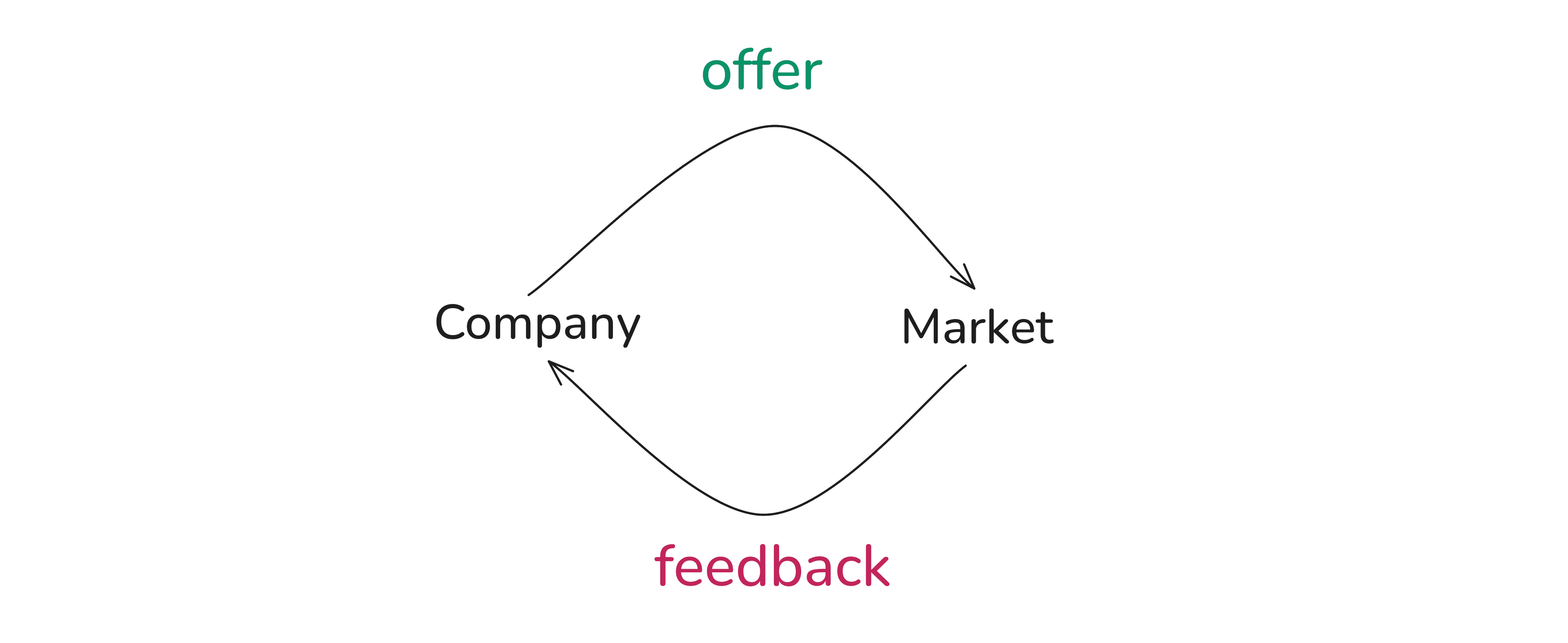
Hand-drawn diagram of the business’s first loop: marketers, salespeople, product managers and the CEO take ideas to market and feed what they learn back into the next attempt.
The main goal of this loop is to try and learn. The business wants to take things to market and then get feedback on whether they’ve got something valuable or not.
The monster, for people in this loop, is uncertainty.
And uncertainty is cruel because no strategy is guaranteed to work. When combined with time (compensation for marketing/sales, or payroll for founders, or data for product managers) it can feel like taking things to market as fast as possible is the only way to reduce uncertainty before a deadline. The more you can take to the market, the more you can get feedback from it, the more you can (potentially) reduce uncertainty.
This loop, and all companies start with this loop, is about pure, raw, speed.
But what happens when a business gets customers?
Ah, now, here’s our second loop. People paying for a service.
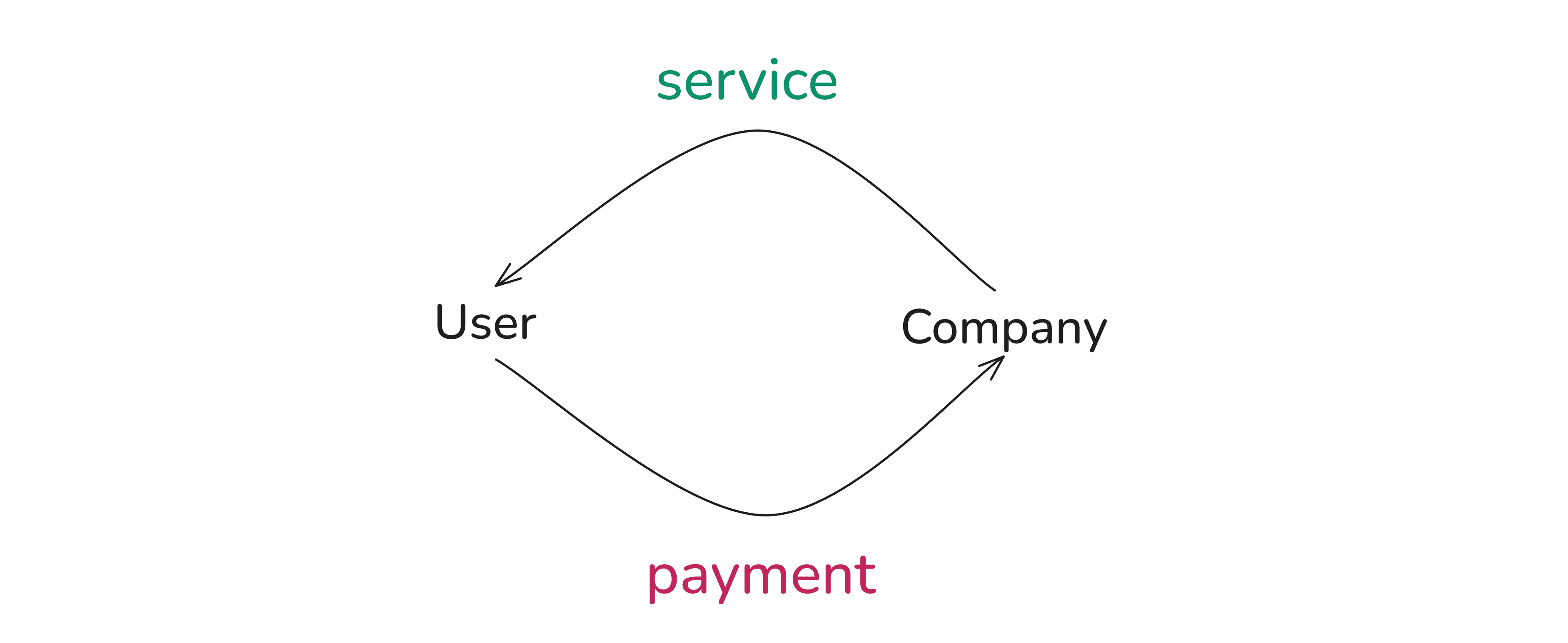
Hand-drawn diagram of the business’s second loop: paying customers using the existing service while the team works to keep that service running.
This loop is where a lot of senior developers find themselves in. The main goal in this loop is the continuation and guarantee of service.
Keep things working, keep things understandable, keep things debuggable, keep things fixable, keep things teachable, keep things stable.
Senior developers worry about stability because they take responsibility for the business to continue serving customers.
And what risks all of that?
Complexity.
It makes a system less understandable, less debuggable, less fixable, less teachable, and ultimately, less stable.
Rising complexity = lowering stability = senior developer failing responsibility = bad bad not nice, payments interrupted, everybody sad.
So, if the first loop’s goal was uncertainty reduction, the second loop’s goal is complexity management.
But why does this lead to communication failure?
Because once you have customers, both loops are running simultaneously. A business needs to both explore possibilities and serve customers at the same time.
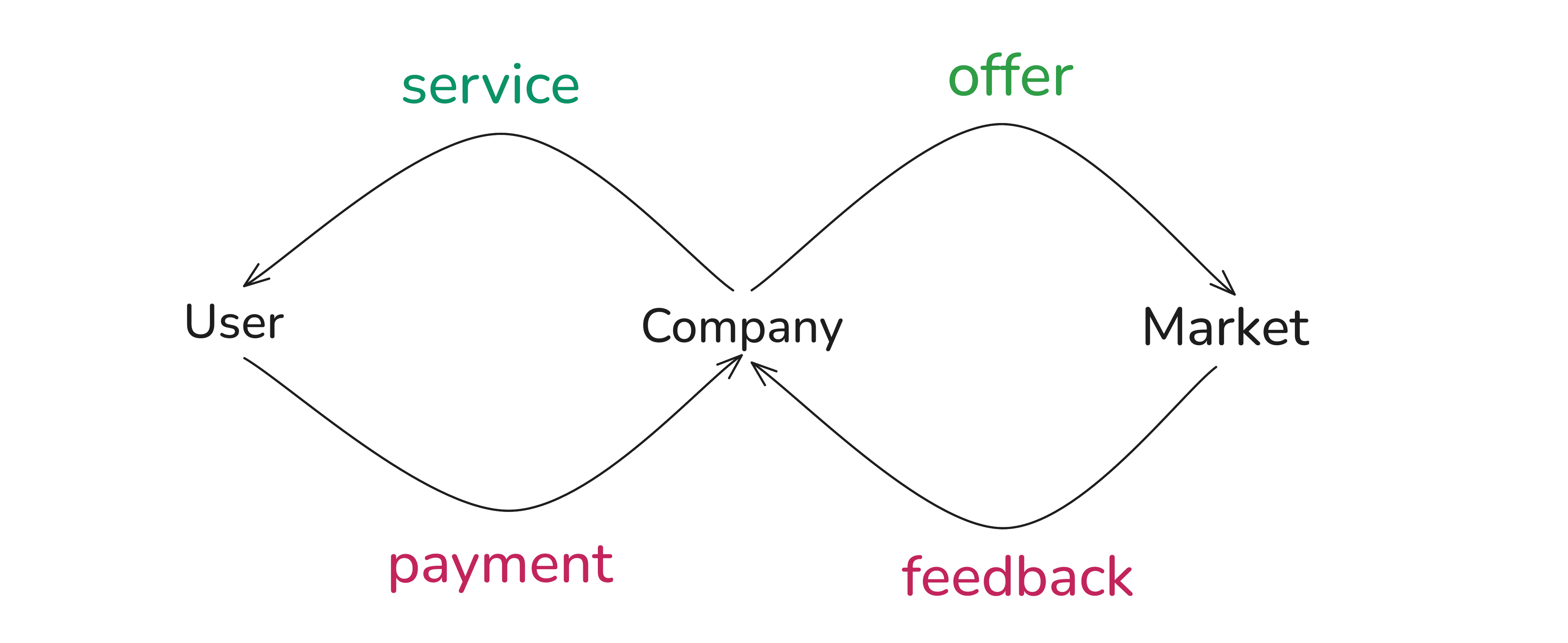
Hand-drawn diagram showing the business’s two loops running side by side: one chasing market feedback, the other keeping paying customers served.
Ok, now you might be able to spot my answer to the question in the title of this post.
Depending on which loop you spend your time on, your problem is framed differently (which is why I think developers get split in their opinions on AI; some work more on one loop than the other)
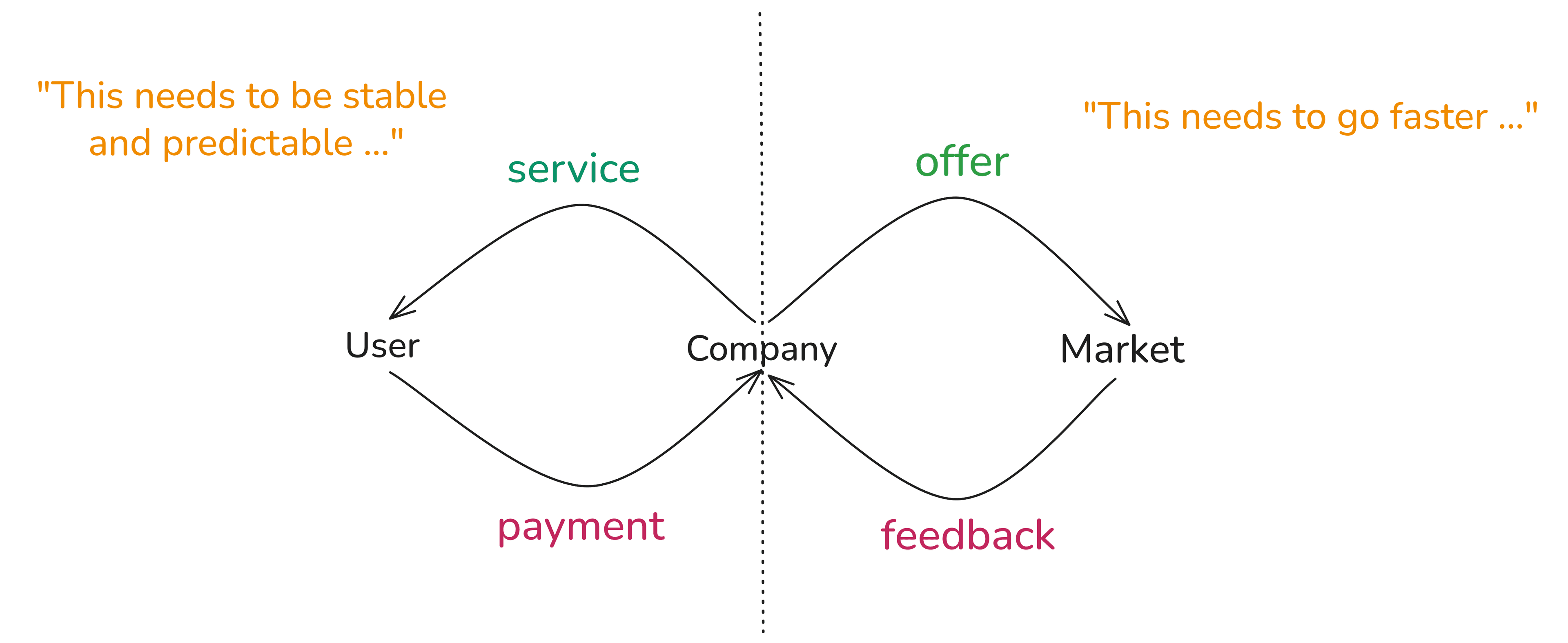
Hand-drawn diagram showing the same development work framed differently by the people in each loop — uncertainty versus complexity.
This was the story of the people in the first loop:
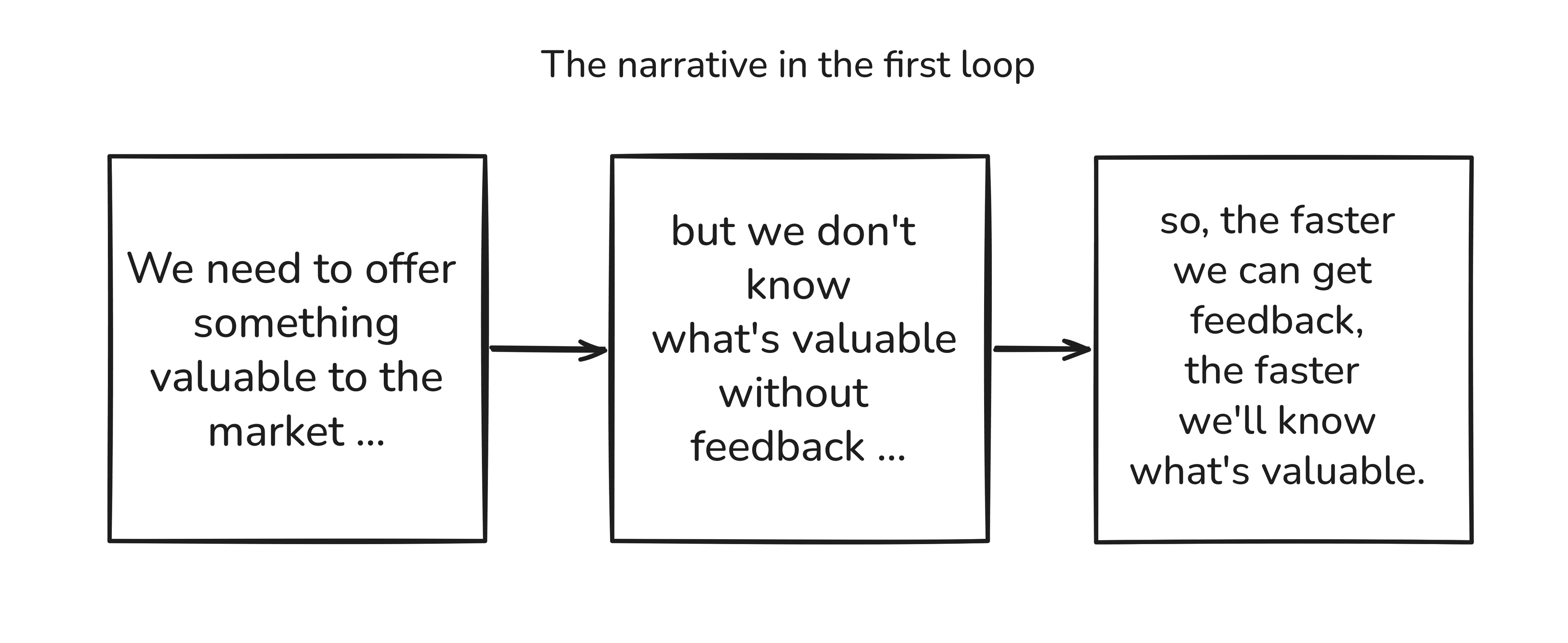
Hand-drawn diagram of the first loop’s story: requests pour in, the team races to ship them so the business can learn from the market faster.
But this was the story of the senior developer in the second loop:
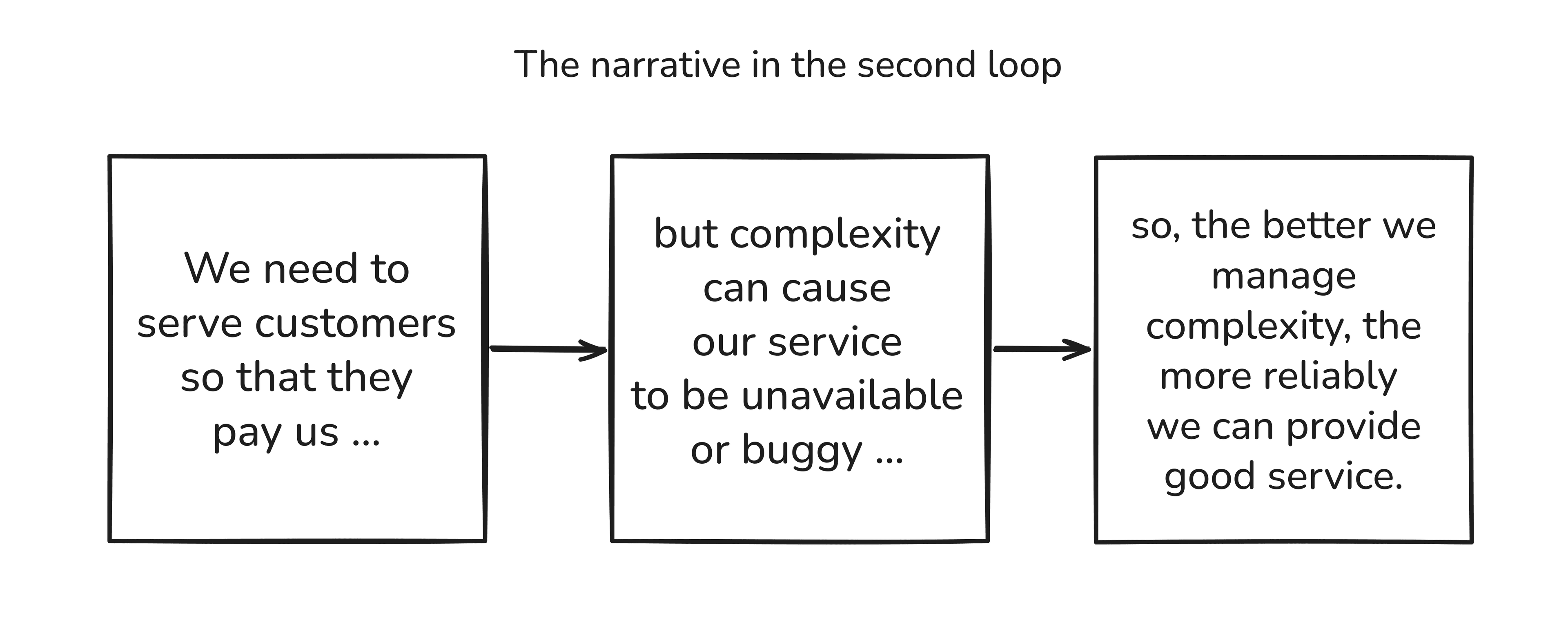
Hand-drawn diagram of the second loop’s story: every new request adds complexity, threatening the stability of the system the senior developer is responsible for.
The stories don’t match.
The more requests to build and add to the system the senior developer gets, the more the senior developer wants to respond with “uhhh, no complexity … maintenance costs … understandability … speed of continuing development … productivity over time …”.
But that does nothing to address the rest of the business’s need for reducing uncertainty.
The copywriter’s diagnosis: You can’t explain away someone else’s problem using your own problems.
And the copywriter’s prescription: You need to describe your solution as a solution to their problem as well.
Senior developer’s fail to communicate because they express their problems in terms of complexity management when they should be expressing their solutions in terms of uncertainty reduction.
By acknowledging that what the rest of the company is seeking for is uncertainty reduction, the senior developer can use their expertise to help.
And what’s the most useful skill a senior developer has? The reluctance to build what’s not necessary; the ability to spot an opportunity to re-use something already built.
Need to collect survey data? Google forms, baby.
Need to build a whole new feature to test it? Have you tried putting a button in the existing UI and seeing if people click it?
Need new analytics service? What’s the most important decision we need analytics for? Can we start with one decision, one chart, one metric?
You want to bake me a whole birthday cake? Just put a candle on my sandwich.
This is what senior developers learn to do: they learn how to give people what they want by being resourceful with existing software.
But how do you communicate this without sending people whole essays?
Copywriters love boiling down multiple signals into singular phrases. And so, here’s the magical phrase every senior developer must learn: ‘Can we try something quicker?’
The use of ‘quicker’ acknowledges what they’re really looking for; ‘something’ implies another way of achieving it; ‘try’ implies imperfection, but also the possibility of it being good enough.
It perfectly cuts down to the requirement of the rest of the company, speed to reduce uncertainty, while allowing the senior developer to exercise their expertise: reduce, re-use, and if life is truly a blessing, avoid.
That’s it. That’s my answer to the title of the post: senior developers talk in terms of complexity when everyone else is worried about uncertainty.
But! Big but!하지만! 정말 중요한 점은!
AI now seems to make all of this pointless, doesn’t it? Why reduce? Why re-use? Why avoid? The AI can build so much in so little time.
이제 AI 때문에 이런 모든 것이 무의미해 보이지 않나요? 왜 줄여야 하죠? 왜 다시 써야 하죠? 왜 피해야 하죠? AI는 너무 짧은 시간에 너무 많은 것을 만들어낼 수 있으니까요.
Ah, well, it can’t yet do the one thing senior developers still do.
음, 아직은 시니어 개발자들이 여전히 하는 그 한 가지를 할 수 없어요.
Take responsibility.책임을 지세요.